• Skip to primary navigation
  • Skip to main content
  • Skip to footer

NAMI Mercer County

Families Meeting the Challenge of Mental Illness

  • Facebook
  • Instagram
  • YouTube
  • Donate
  • Learn More
    • Community Education
    • Compelling Conversations
    • Family-to-Family
    • Harvest of Hope Wellness Conference
    • NEXTGEN Initiatives
    • Toolkits
    • Resource Library
    • Ending the Silence
    • In Our Own Voice
  • Find Support
    • Connection
    • Coping With Trauma
    • Empathy Network
    • Intensive Family Support Services (IFFS)
    • Social Support
    • THRIVE Parent Group
    • Mending Mindsets
    • Helpline
  • Get Involved
    • Join
    • Volunteer
    • Intern
    • Donate
      • Recognize Someone Special
    • Sponsor
    • Night Out With NAMI
    • NAMIWalks Mercer
    • The Anti-stigma Pledge
  • Meet Us
    • Mission, Values & Impact
    • History
    • Meet the Staff
    • Meet the Board
    • Meet our Awardees
    • Reports & Documents
    • Directions
  • Calendar
  • Contact
  • Blog

Blog

What is Schizophrenia?

May 23, 2024 By nami2017

by Sharon Joag, MSW, LSW

Schizophrenia has been a stigmatized mental illness for hundreds of years, and that stigma sadly continues today. So, what is Schizophrenia? Schizophrenia is a mental illness characterized by delusions, hallucinations and disorganized thoughts and behaviors.

In fact, in the early 1900’s hydrotherapy treatment was used where patients were wrapped in sheets dipped in water ranging from 40 degrees to 100 degrees. The belief was that poisonous toxins in the body would be released through the skin through this hydrotherapy. Electroconvulsive treatments, insulin induced comas, and prefrontal lobotomies (1940’s and 1950’s) were the accepted therapies of that time. Now we know that these therapies where brutal and traumatic to those diagnosed with schizophrenia, and even exacerbated the illness.

However, the invention of new medications, modern cognitive therapies as well as family psychoeducation has really helped people who struggle with a diagnosis of schizophrenia. With education, families learn about schizophrenia and the importance of taking medications, and finding family and community support. It is important for those who have a diagnosis of schizophrenia and their families to understand that the illness does not go away. However, with community-based treatment and social support, a person with a diagnosis of schizophrenia can have an improved quality of life, and have meaningful relationships and contributions to family and community.

At NAMI (National Alliance on Mental Illness) Mercer Chapter, we provide family psychoeducation and caregiver support for the families in a group setting.  Groups provide a place for families to exchange information regarding the illness and learn what works and what doesn’t work, and access community resources.

NAMI Mercer also has a group that meets twice a month, called The Hearing Voices group where those diagnosed with schizophrenia can meet in a safe and supportive environment. Knowing people with the same challenges can help people with schizophrenia recover from acute episodes, and help them to find coping strategies to avoid relapse and hospitalization.

What can you do on World Schizophrenia Awareness Day?

  1. The very first thing you can do today is to educate yourself and learn more about schizophrenia.
  2. Wear a silver ribbon to show your support for those diagnosed with the illness.
  3. Volunteer at NAMI Mercer and show your support.
  4. Advocate! Advocate for increased funding for mental health research, and for improved access to mental health care. Help to educate others  and reduce the stigma surrounding schizophrenia.

Filed Under: Blog

Post Traumatic Stress Disorder (PTSD) after surgery?

May 23, 2024 By nami2017

by Sharon Joag, MSW, LSW

What is the first image you have when you think about Post Traumatic Stress Disorder? If you are like me, the first thing that pops into my head is a war veteran; and someone who has been through something that induces major trauma, sometimes lasting for a lifetime.

But what about those who have undergone major surgery? Although much less talked about, trauma from surgery has now become a global public health crisis. Globally, 310 million major surgeries are performed every year, and of those, 40-50 million surgeries are performed in the US (Dobson, 2020). From the moment a patient is given a diagnosis the black cloud of imminent surgery looms ahead. First, the anxiety sets in, and the rumination on the actual surgery, what it entails, what exactly will happen in the operating room. Questions in the minds of patients. “Will I feel anything while undergoing surgery? Will anesthesia work? What is going to happen after surgery?” 

Doctors typically do not and cannot always talk to a patient about every single minute detail of a surgery. Surgeons can only provide an overview of a surgery, but the details are vague and sometimes unknown, even to the surgeon, until the surgery is actually underway. This uncertainty creates a milieu of confusion, and unhealthy rumination on all that could potentially go wrong, culminating in a deep anxiety and post-surgical depression that can last for months or years after the surgery, inevitably aiding in extending the recovery time of a patient who has undergone a major surgical procedure.

These ruminating thoughts can be overwhelming to an individual. Having regular therapy appointments to monitor an individual’s thought processes, and talk through some of these traumatic future events, especially a planned surgery is important in helping patients find tools that they can use to decrease stress levels, understand their thoughts, and find ways to manifest optimal mental health.

Many people suffer tremendously pre, peri and post surgically with anxiety and depression. Major surgeries such as surgery to remove cancer (breast, a portion of the esophagus, stomach or colon). The physical changes that a person has to endure post-surgery takes a toll on the psyche. The brain has to catch up with its new body image, food and diet changes, and sometimes chronic pain which has become a part of the new life. Often times, a person faces depression, fear and PTSD which causes sleep disturbances, and further delays mental healing.

Coming to terms with and accepting the new person post-surgery is an enormous and daunting hurdle. Having someone to speak with confidentially who can help to guide a patient through this process is essential. In addition, the caregivers in the equation cannot be neglected. They too have to come to terms with their new partner or spouse or loved one who is forever changed. Helping the caregiver to grapple with these changes is also much needed, as caregivers are many times the primary support system for an individual who has undergone major surgery.

Making a plan, setting long term goals, and then short-term goals that are achievable are important in achieving success with positive mental health. Speaking to a health care professional and understanding the importance of a support system including friends, family, and community are the pillars of a successful and positive mental health post-surgery, and recovery from PTSD due to major surgery.

References:
Dobson, G.P., Trauma of major surgery: A global problem that is not going away. International Journal of Surgery, 2020. 81(47-54).

Stanzel, A., Sierau, S. Pediatric Medical Traumatic Stress (PMTS) following Surgery in Childhood and Adolescence: a Systematic Review. Journ Child Adol Trauma 15, 795–809 (2022). https://doi.org/10.1007/s40653-021-00391-9

Filed Under: Blog Tagged With: blog, mental illness, PTSD

What it Takes to Understand and End Mental Health Stigma

April 26, 2024 By nami2017

by Natalie Schrader
NAMI Mercer Intern

In a world that is always progressing and trying to be better, mental health stigma is a harmful force that lurks in the shadows. Stigma can prevent millions from seeking the help they need. Let’s discuss some ways to understand stigma’s impact and embrace diversity. Stigma surrounding mental health shows up in many forms: misunderstandings, stereotypes, and discrimination.

This type of judgment can often negatively affect open conversations and perpetuate a culture of silence around mental health issues. Words matter, the language we use can either push stigma or contribute to its dismantling. It is crucial to choose words carefully, avoiding derogatory terms and embracing person- first language that acknowledges the individual beyond their condition. Educating yourself can become a potent weapon against stigma. By educating oneself, a person become more aware of the roots of myths and misconceptions surrounding mental health. This can help build and understanding about certain mental health conditions and seeking help is a display of courage, not weakness.

Types of Stigma

Self-Stigma: Self- stigma also known as internalized stigma, occurs when individuals with mental health conditions internalize the negative beliefs and attitudes held by society. This can lead to feelings of shame, lowered self-esteem, and reluctance to seek help or disclose ones conditions.

Courtesy Stigma: Courtesy stigma is the stigma faced by individuals due to their association or connection with someone who has mental health conditions. This can affect family members, friends or colleagues who may experience discrimination or negative attitudes because of their relationship with someone who has a mental health challenge.

Societal Stigma: Societal stigma encompasses the broader societal attitudes, beliefs, and norms regarding mental health. It includes the collective prejudices, biases and discriminatory practices within the culture that contributes to the marginalization of individuals with mental health conditions.

Religious Stigma: Religious stigma involves negative attitudes and discrimination based on religious beliefs. Individuals with mental health conditions may experience stigma from with in or outside of the religious community, impacting their sense of belonging and acceptance.

Ways to Take Care of Yourself While Fighting Stigma

  • Mindfulness and Meditation: Doing 10 minute-30 minutes meditations can help us become more mindful in our everyday lives. Meditation can look like a lot of different things. Something as simple as laying down and closing your eyes while doing breathing techniques can help relieve stress and anxiety from the day.
  • Journaling: Journaling to express thoughts and feelings from day to day can help a person not hold on to feelings about situations that are out of their own control. It is a place to be honest with yourself without any judgement from an outside source.
  • Check in with Emotions: regularly checking in and assessing emotions can help someone reflect on what they are feeling in that moment. If an individual were to do this throughout the day, it becomes easier to not only name what they’re feeling but understand how to cope with changing emotions and plan future coping skills.
  • Celebrate Achievements: celebrating achievements, no matter how small it might feel, can really help an person understand that big wins don’t come every day but little ones do.

Filed Under: Blog

How Social Media Affects Body Image

January 23, 2024 By nami2017

By Julia Roman, NAMI Mercer Fall 2023 Intern

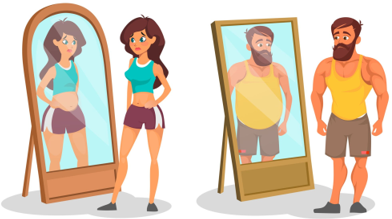
With 4.89 billion users worldwide, social media is extremely prevalent. The increasingly widespread use of social media use in our society has led to extensive research that has consistently proven the strong correlation with negative body image ideals.

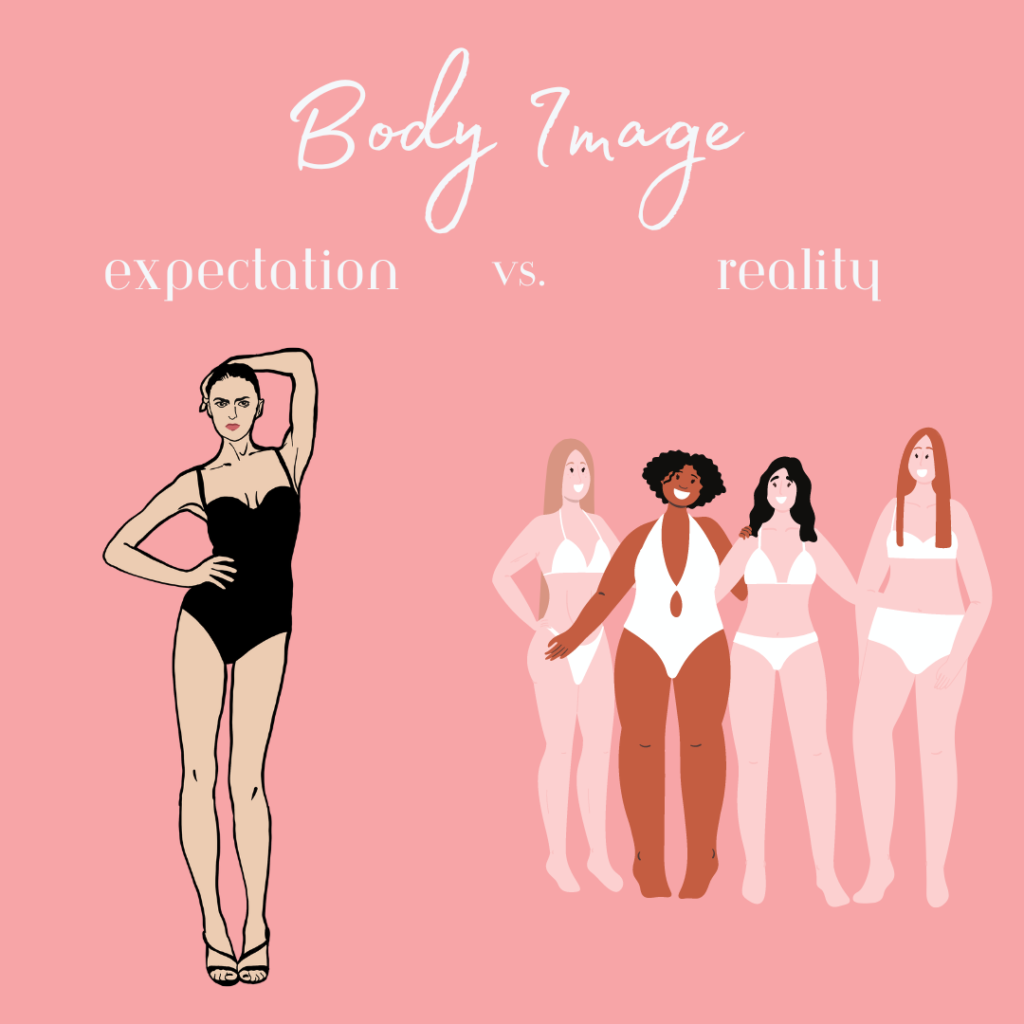
Social media provides constant exposure to unrealistic beauty standards for users. This is particularly harmful for younger audiences, as they are more impressionable. For example, young girls using social media platforms such as Instagram or TikTok are more likely to see an increase in body dissatisfaction. These platforms often glorify and normalize negative behaviors, such as extreme dieting, excessive exercise, or eating less than is necessary.

Exposure to these detrimental behaviors can lead to a skewed image of one’s body, which can ultimately lead to decreased self-esteem and an increase in disordered eating behaviors. For instance, when people see videos or images on social media of influencers, celebrities, or even their friends, they will inherently compare themselves to their physical appearance. This is intensified when the individual posts something that promotes changing one’s body, such as “What I Eat In A Day” videos, workout videos, “before and after” images, or “try-on hauls” in which the poster is engaging in body checking.

Since these behaviors are so normalized in our society, people posting this content on social media may not realize the harm. However, we must educate ourselves about how engaging in these practices can be detrimental to our mental health, as well as the mental health of our friends, family, and people we may not know.

While social media is inundated with harmful messages, many users attempt to counteract this with positive content. For example, the body-positive movement on social media has gained popularity, with millions of users tagging #bopo, #bodypositive, and #bodypositivity. This movement has been proven to help people appreciate their bodies more, as it encourages people to focus on the positive aspects, rather than elements they are unhappy with. Research has shown that viewing body-positive content can improve body satisfaction and increase positive mood.

While many of the statistics surrounding body image and social media are negative, we must also recognize that platforms such as Instagram and TikTok can also create positive environments for those struggling with body image issues. It is important to be mindful of the creators that we follow, as they can inadvertently have a large impact on a person’s perception of their appearance.

Comparison is the thief of joy, so it is necessary to remember that everyone is unique. Also, thin ≠ healthy: we must not assume that the way a person looks has anything to do with their health. We are only given one body, we should appreciate it for all that it does for us, rather than what it looks like.

If you are struggling with your body image and are trying to find ways to improve, try the following:

  • Follow body-positive creators on social media (I have listed some below)
  • Practice positive affirmations (examples below)
  • Practice gratitude for your body (examples below)
  • Don’t ruminate on body changes: this is a natural part of the human experience!
  • Remember that beauty is in the eye of the beholder

Body-Positive Creators:

  • @brittanilancaster (TikTok)
  • @thekatrinanichole (TikTok)
  • @spencer.barbosa (TikTok)
  • @laura.iu (Instagram)
  • @grow.withmoll (Instagram)
  • @kale.themwith.kindness (Instagram)

Positive Affirmations

  • “I am worthy of love and respect, no matter what my body looks like.”
  • “I love and accept myself and my body unconditionally.”
  • “I am comfortable and confident in my skin.”
  • “My body is unique, and that is something to be celebrated.”
  • “I do not need to change my appearance to be beautiful.”

Gratitude for your Body

  • “I am grateful for the strength and health my body provides.”
  • “I appreciate that my body can breathe and move.”
  • “I am grateful that my body allows me to experience life fully.”
  • “I am thankful that I can participate in daily activities without a second thought”
  • “I am appreciative of my body’s healthy functioning which allows me to thrive”

Sources

  • Abdou, A. Follow These 8 Body Positivity TikTokers For An Instant Boost Of Self-Love. Gimme. https://gim.me/how-to/body-positivity-tiktokers-to-follow/.
  • Cohen R, Fardouly J, Newton-John T, et al. (2019) #BoPo on Instagram: An experimental investigation of the effects of viewing body positive content on young women’s mood and body image. New Media & Society 21: 1546–1564.
  • Cohen, R., Newton-John, T., & Slater, A. (2021). The case for body positivity on social media: Perspectives on current advances and future directions. Journal of Health Psychology, 26(13), 2365-2373.
  • “How Many People Use Social Media?” (2023). Oberlo. https://www.oberlo.com/statistics/how-many-people-use-social-media#:~:text=The%20latest%20figures%20show%20that,jump%20in%20just%20five%20years.
  • Jiotsa, B., Naccache, B., Duval, M., Rocher, B., & Grall-Bronnec, M. (2021). Social media use and body image disorders: Association between frequency of comparing one’s own physical appearance to that of people being followed on social media and body dissatisfaction and drive for thinness. International journal of environmental research and public health, 18(6), 2880.

Filed Under: Blog Tagged With: blog, body image, mental illness, social media

Trauma, Mental Health, and Current Events

December 7, 2023 By nami2017

By Julia Roman, NAMI Mercer Fall 2023 Intern

Traumatic events have a large impact on one’s mental health. Many experiences in life can be classified as trauma, including single events, ongoing stress, living in an unhealthy environment, or seeing someone else get hurt. These events can lead to PTSD and other mental health conditions, as memories of trauma can be extremely detrimental to one’s mental state.

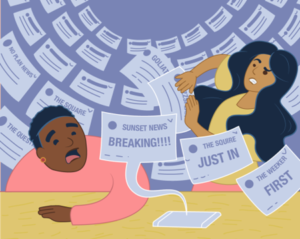
Trauma can also be experienced from outside sources, including the news. The news often presents content that can be detrimental to our mental health, such as detailed stories or graphic images. Events such as mass shootings, information about climate change, or political unrest can affect us more than we think. Additionally, more media outlets expose us to the news than ever, including social media platforms such as X, Instagram, or TikTok. We may think that we are desensitized to this information, but in reality, having constant access to this negative content affects our overall mood and can lead to mental health struggles.

This phenomenon was widely studied throughout the COVID-19 pandemic when people were constantly exposed to anxiety-inducing content from media outlets. Those who participated in “doomscrolling” – a term that emerged during the pandemic to describe the negative impact of too much exposure to negative content – were more likely to experience negative mood, and depression, anxiety, and PTSD symptoms.

Recently, the Israel-Palestine conflict has caused a tremendous amount of tension due to the complexity of emotions surrounding the issues. The coverage of this conflict has been nonstop, with many violent and graphic content being shared on social media and from news sources. Images and videos are easily accessible and can cause feelings of anxiety and depression. The constant access to this negative content can impact sleep habits, productivity, stress levels, and sometimes even PTSD symptoms.

The problem lies in the fact that many people want to stay knowledgeable about current events and are unsure how to do so without causing mental health struggles. While it can be difficult to draw the line between being informed and being over-informed, we must protect our mental health. Below is a list of best practices to employ when consuming the news:

How to be a Mindful Media Consumer

  • Turn off notifications from news sources.
    • This will allow you to not be bombarded with negative content all day long.
  • Set boundaries for yourself.
    • For example, only watch the news for a certain amount of time each day. Experts recommend 30 minutes per day. Also, set limits on the time of day you are consuming the media, and keep in mind that it is detrimental to watch traumatic events right before going to sleep.
  • Curate your social media feed to fit what is best for you.
    • Choose a few news sources that you trust, and mute or unfollow the rest. Also, do not feel guilty for muting or unfollowing friends/family members who post content that causes stress.
  • Practice mindfulness.
    • If you feel yourself becoming stressed or overwhelmed by the news you are consuming, it is best to take a break. Do not feel guilty for needing to protect your mental health.
  • Take care of your overall mental health by going for a walk, meditating, or doing deep breathing exercises.
    • This will help you reduce your overall stress levels, which can help when you feel stressed from watching the news.

Sources

  • https://www.mentalhealth.org.uk/explore-mental-health/a-z-topics/trauma#:~:text=Trauma%20can%20make%20you%20more,difficulties%20in%20your%20daily%20life.
  • https://www.apa.org/monitor/2022/11/strain-media-overload
  • https://www.hartsteinpsychological.com/how-exposure-to-the-news-can-impact-your-mental-health#:~:text=Each%20time%20we%20see%20or,anxiety%20and%20sense%20of%20safety.
  • https://www.cnn.com/2023/10/14/health/mental-health-israel-hamas-wellness/index.html
  • https://www.cbsnews.com/philadelphia/news/israel-palestine-war-conflict-mental-health-gaza-strip-hamas/

Filed Under: Blog

Understanding Halloween Related Phobias

October 29, 2023 By nami2017

Halloween is quickly approaching, and while scary situations are fun for lots of people, for others it can be overwhelming and stressful. You might wonder how or why this would be so? Phobias…they are far more common and distressing than you might think. People with phobias are more vulnerable than usual during the Halloween season; many of those affected by a specific phobia will find themselves repeatedly in close contact with their obsessive fear.

A few phobias related to Halloween include:

  • Arachnophobia- Fear of Spiders
  • Ophidiophobia- Fear of Snakes
  • Nyctophobia- Fear of Darkness
  • Thanatophobia- Fear of Death

Many people do not realize how common phobias are or how intense and debilitating the associated fear and anxiety can be. Phobic reactions include physical symptoms such as:

  • Rapid Breathing
  • Sweaty palms
  • Faintness
  • Nausea
  • Dizziness

Since spiders, snakes, darkness, and skeletons are pretty much synonymous with Halloween—they are almost impossible to avoid. So, what can a person do to cope with these phobias?

  • Practice deep-breathing and relaxation techniques
  • Minimize the use of caffeine and alcohol since these tend to heighten anxiety
  • Surround yourself with family and friends who help you feel safe
  • Talk about your feelings with a counselor or trusted other and try various coping strategies

What can the rest of us do to help someone with a phobia during this season?

  • Be sensitive and understanding about phobia triggers
  • Validate feelings and reassure the person they are not alone
  • Avoid pressuring them
  • Ask them what helps and try to deliver on that

When decorating or dressing up, try to be mindful of those with phobias, especially those within your social network. This will ensure everyone can have fun and enjoy the holiday. Happy Halloween!

~ Nikolas Gonzalez – NAMI Intern ‘23

~ Janet Haag, Ed.

Filed Under: Blog

  • « Go to Previous Page
  • Go to page 1
  • Interim pages omitted …
  • Go to page 3
  • Go to page 4
  • Go to page 5
  • Go to page 6
  • Go to page 7
  • Go to Next Page »

Footer

Contact NAMI Mercer

609-799-8994
home@namimercer.org

1235 Whitehorse-Mercerville Rd.
Bldg. C, Ste. 303
Hamilton, NJ 08619

NAMI Mercer is a qualified 501(c)3 organization.

In a Crisis?

Call 609.396.HELP (4357)
Capital Health Emergency
Mental Health Services
Available 24/7

For children (< age 21)
Call 877.652.7624
Perform Care Mobilization
and Stabilization Services
Available 24/7

Follow Us

  • Facebook
  • Instagram
  • LinkedIn
  • YouTube

Reports & Documents

Annual Report
Newsletters
Privacy Policy

Contact
Sitemap

Copyright© 2026·NAMI Mercer County· Website by Blue Kite Web Solutions LLC