• Skip to primary navigation
  • Skip to main content
  • Skip to footer

NAMI Mercer County

Families Meeting the Challenge of Mental Illness

  • Facebook
  • Instagram
  • YouTube
  • Donate
  • Learn More
    • Community Education
    • Compelling Conversations
    • Family-to-Family
    • Harvest of Hope Wellness Conference
    • NEXTGEN INITIATIVES
    • Toolkits
    • Resource Library
    • Ending the Silence
    • In Our Own Voice
  • Find Support
    • Connection Support Group
    • Empathy Network
    • Hearing Voices Support Group
    • Intensive Family Support Services (IFFS)
    • Social Support Groups
    • Just Parents
    • Mending Mindsets
    • Helpline
  • Get Involved
    • Join
    • Volunteer
    • Intern
    • Donate
      • Recognize Someone Special
    • Sponsor
    • Night Out With NAMI
    • Participate in NAMIWalks
    • Take the Anti-stigma Pledge
  • Meet Us
    • Mission, Values & Impact
    • History
    • Meet the Staff
    • Meet the Board
    • Our Awardees
    • Reports & Documents
    • Directions to NAMI Mercer
  • Calendar
  • Contact
  • Blog

mental illness

Managing MDD

June 23, 2025 By nami2017

Angelina Villalva, NAMI Intern

Two weeks ago on June 12, my grandmother passed away. Although everything had changed, in some ways, it felt like she wasn’t really gone. The sun kept coming, I still had to go to work, and my family kept moving forward as usual. For days, this normalcy left me with a bit of silent hope. I kept waiting for my cell phone to buzz, thinking it was my dad sending me a text that she was coming home, that somehow the hospital had gotten it wrong, and everything was going to be okay. It breaks my heart to say that text never came, and it hurts even more to say that time kept moving, and the days kept passing by. 

Some days I had trouble sleeping. Other days I felt nothing at all. Presently, I’m happy to say that I am in a much better place, and it’s thanks to my amazing support system that got me through this tough period. Family members who shared stories of my grandmother and friends that were willing to listen to my rollercoaster of thoughts allowed me to not just grieve, but remember to love, and how to pick myself up. Without my village of people, I might’ve had a harder time coming out of a depression. And for those who unfortunately don’t have such support, they often experience a harder time recovering from depression. 

Something that binds us all together in the human experience of life is going through loss and hardship. To have meaning is to find an end, and sometimes it comes sooner than we’d like. It’s not uncommon for those undergoing loss and hardship to be experiencing depression, but this is different from clinical depression, also known as major depressive disorder (MDD). 

While losing a loved one is a cause of MDD, other causes include (but are not limited to): 

  • Reduction in size of brain regions that regulate mood and cognition 
  • Neurotransmitter imbalance of serotonin, norepinephrine, and dopamine
  • Genetics; individuals with family members diagnosed with MDD are 3x as likely to develop it as well compared to someone without a family history of the condition
  • Adverse childhood experiences (such as abuse/trauma) 
  • Other stressful life events (trauma, divorce, isolation, lack of support) 

According to the DSM-5 (the standard classification of mental disorders), to be diagnosed with MDD an individual must have 5 or more symptoms to be present during a 2-week period. These symptoms must have significant distress or impairment as a result and must not be attributable to substance use or other medical conditions. In other words, multiple of these symptoms must be present in a single episode, not recurrent. The possible symptoms are as follows: 

  • Depressed mood (subjective/observed) 
  • Loss of interest or pleasure
  • Change in weight of appetite
  • Insomnia or hypersomnia
  • Psychomotor retardation or agitation (observed) 
  • Loss of energy or fatigue
  • Worthlessness or guilt
  • Impaired concentration or indecisiveness
  • Thoughts of death, suicidal ideation, or suicide attempt 

The treatments available for MDD include medication and psychotherapy. However, it is worth noting that while both separately prove to be effective, combining both of these treatments yield the highest positive results. In some further severe cases, individuals with MDD have limited responses to medication. In this event, other treatments such as electroconvulsive therapy are used in place. 

Aside from medication and therapy, John Hopkins Medicine highlights some important reminders on how to better address your depression: 

  • Break large tasks into small ones
  • Confide in the people around you
  • Do something nice for others 
  • Work in regular exercise
  • Eat health, well-balanced meals
  • Stay away from alcohol and other drugs

Something that brought me comfort during my time grieving my grandmother was the phrase, “Grief is love with nowhere to go.” Whether you’re grieving family or a friend, someone you used to know or even the person you used to be, that is all love you have inside of you. I’m not saying depression is cured from something as simple as feeling the love inside of yourself, but it is a nice place to start.

I leave you with a quote from a character from one of my favorite childhood comfort shows, Avatar: the Last Airbender. 

“Sometimes life is like this dark tunnel. You can’t always see light at the end of the tunnel, but if you just keep moving…you will come to a better place.” – Iroh

Resources:

  • “Understanding Major Depressive Disorder (MDD) Within the African American Community” – Toolkit by former NAMI Intern, Nikhil Nandkumar
    • https://namimercer.org/wp-content/uploads/2025/03/Understanding-Major-Depressive-Disorder-within-the-African-American-community.pdf
  • NAMI Mercer Helpline Phone Number: 609-799-8994 x17
  • Suicide and Crisis Lifeline: Text or call 988
  • National Suicide Prevention Lifeline: Call 1-800-273-8255

Citations: 
  • https://my.clevelandclinic.org/health/diseases/24481-clinical-depression-major-depressive-disorder
  • https://www.mayoclinic.org/diseases-conditions/depression/symptoms-causes/syc-20356007
  • https://www.hopkinsmedicine.org/health/conditions-and-diseases/major-depression

Filed Under: Blog, Let's Talk Abt It Tagged With: blog, depression, major depressive disorder, MDD, mental illness

Debunking DDD

June 16, 2025 By nami2017

Angelina Villalva, NAMI Intern

One of my all time favorite movies is The Truman Show. For those unfamiliar (or need a recap), the movie revolves around a guy named Truman, and unbeknownst to him, he’s the star of a TV show about his own life. Neighbors, friends, even his own family, are all actors. Every detail in his life, from his fear of dogs, to the woman he’s married to, was planned and controlled. As viewers progress through the film, we not only discover just how much of his life is being manipulated, but how far people will go to keep him from discovering the truth. 

Aside from the plot, what makes The Truman Show meaningful to so many people, including myself, belongs to its relatability. As Truman slowly discovers the truth about the world around him, he’s faced with weird feelings that something in his environment is not quite right, or that the things around him are not real. As he begins to break down and become more and more suspicious of these things, Truman begins to exhibit symptoms of derealization. 

It is very common for people to experience feelings of derealization. In fact, according to the Merck Manual, almost one half of people will have experienced feelings of detachment from themselves (depersonalization) or their surroundings (derealization) at some point in their life. This can occur after experiencing life-threatening danger, taking certain hallucinogens or drugs, becoming very tired, or being deprived of sleep. 

However, some individuals may be afflicted from symptoms of depersonalization and derealization for long periods of time, which can make it hard to function. This is what’s known as Depersonalization-Derealization Disorder (DDD). 

As mentioned before, individuals with DDD may experience feelings of detachment from their surroundings, but they may also experience detachment from their body. Therefore, symptoms of DDD are split between derealization experiences, and depersonalization experiences. 

Derealization Symptoms

  • Feeling that people and surroundings are not real (almost like you’re living in a movie/dream) 
  • Feeling emotionally disconnected from people you care about 
  • Surroundings that appear out of their usual shape or are blurry or colorless
  • Thoughts about time that are not real such as recent events feeling like the distant past
  • Unrealistic thoughts about distance and the size and shapes of objects

Depersonalization Symptoms

  • Feelings that you’re seeing thoughts, feelings, or body or parts of body from the outside 
  • Feeling like a robot or that you’re not in control of what you say or how you move 
  • The sense that your body, legs, or arms, appear twisted or like they’re not the right shape 
  • Emotional or physical numbness of your senses or responses to the world around you
  • Sense that memories lack emotion and they may or may not be your own memories

The causes of DDD are still not well understood. Some think that high levels of stress, fear, childhood trauma or generally stressful and traumatic events could lead to bouts of DDD. It is also highly probable that due to genetic and environmental factors some people may be more likely to experience depersonalization and derealization than others, but again there is no definite source. 

What sets DDD apart from a psychotic disorder is awareness. Despite feeling this detachment and separation from bodily or environmental senses, individuals remain in touch with reality and understand that these perceptions aren’t real. This often causes frustration and anxiety, with people commonly reporting feeling that they are going crazy. This awareness can lead to comorbidities such as depression, anxiety, OCD, PTSD, or personality disorders. 

While it is still unsure about the best way to treat DDD, the most current available options are to use various psychotherapies (cognitive behavioral, eye movement desensitization processing) or medication. 

As always, remember you are supported and loved, even if you feel alone. There will always be someone willing to listen, and you deserve to get the resources you need. 

Resources: 

  • NAMI Mercer Helpline Phone Number: 609-799-8994 x17
  • Suicide and Crisis Lifeline: Text or call 988
  • National Suicide Prevention Lifeline: Call 1-800-273-8255
  • “A Blueprint to Healing From Depersonalization” – NAMI (https://www.nami.org/recovery/a-blueprint-to-healing-from-depersonalization/)
  • Unreal Charity– UK group dedicated to supporting people who have experienced DDD: https://www.unrealcharity.com/

Citations: 

  • https://www.mayoclinic.org/diseases-conditions/depersonalization-derealization-disorder/symptoms-causes/syc-20352911
  • https://my.clevelandclinic.org/health/diseases/9791-depersonalization-derealization-disorder
  • https://www.merckmanuals.com/home/mental-health-disorders/dissociative-disorders/depersonalization-derealization-disorder

Filed Under: Blog, Let's Talk Abt It Tagged With: blog, DDD, depersonalization-derealization disorder, mental illness

Histrionic Minds

May 27, 2025 By nami2017

Bella Santulli, NAMI Intern

This May, as we recognize Mental Health Awareness Month, it is essential to emphasize less-discussed disorders such as Histrionic Personality Disorder (HPD) to encourage understanding, challenge stigma, and promote connection for those who feel overlooked or misrepresented.

So, What is HPD? HPD is a mental health condition that involves an unstable center of emotions as well as a distorted self-image. For people with this condition, their self-esteem depends on the approval of others, not themselves. Additionally, they desire to be noticed by others, often exhibiting erratic or impulsive behavior. Researchers estimate that approximately 1% of people have this condition, predominantly women, although more research is being conducted for undiagnosed men. 

The criteria for diagnosing this condition include five or more of the following behaviors.

  • Uncomfortable when not the center of attention.
  • Seductive or provocative behavior.
  • Shifting and shallow emotions.
  • Uses appearance to draw attention.
  • Impressionistic and vague speech.
  • Dramatic or exaggerated emotions.
  • Suggestible (easily influenced by others).
  • Considers relationships more intimate than they are.

It is important for those who have HPD to seek outside support, such as talk therapy or different support groups. Cleveland Clinic recommends these steps because gaining insight into their condition tends to have better outcomes and increased functionality in social relationships. 

Shedding light on Histrionic Personality Disorder, this Mental Health Awareness Month helps bring attention to often less-known or ignored conditions. By understanding HPD, we can build empathy and create space for people to seek help without shame or judgment.

Book of the Week: Boy Parts by Eliza Clark

This novel follows Irina in Newcastle, UK. She is a troubled photographer with a twisted view of herself and others. Her mind is chaotic—full of obsession, control, and confusion between what’s real and what’s not. It is a raw look at a woman unraveling and a powerful match for this week’s focus on Histrionic Personality Disorder. 

Resources

  • NAMI Mercer Helpline Phone Number: 609-799-8994 x17
  • NAMI Mercer Helpline Email: helpline@namimercer.org
  • Additional Information and Connection Options: https://www.helpguide.org/mental-health/personality-disorders/histrionic-personality-disorder-causes-symptoms-treatment

References

  • Lovering, Nancy. “Treating Histrionic Personality Disorder.” Edited by Jeffery Ditzell, Psych Central, 14 Oct. 2014, psychcentral.com/disorders/histrionic-personality-disorder/treatment. 
  • “Histrionic Personality Disorder: Causes, Symptoms & Treatment.” Cleveland Clinic, 19 Mar. 2025, my.clevelandclinic.org/health/diseases/9743-histrionic-personality-disorder. 
  • Torrico, Tyler J. “Histrionic Personality Disorder.” National Institutes of Health, U.S. National Library of Medicine, 20 June 2024, www.ncbi.nlm.nih.gov/books/NBK542325/#:~:text=Introduction-,Histrionic%20personality%20disorder%20(HPD)%20is%20a%20chronic%2C%20enduring%20psychiatric,late%20adolescence%20or%20early%20adulthood.

Filed Under: A New Perspective, Blog Tagged With: blog, histrionic personality disorder, mental illness

Addressing Anxiety

May 19, 2025 By nami2017

Angelina Villalva, NAMI Intern

It was difficult waving goodbye to all my hometown friends, knowing that it would be months before I saw any of their faces again. Months before I saw my family again. Months before I would be home. I was prepared for this, I knew this was the natural course of progression for every college student. Yet, at the same time, I felt a heavy pit settle in my stomach for the uncertainties I would have to face alone. 

While most college students are already accustomed to this familiar feeling, some are experiencing these changes for the first time. That is, of course, anxiety. Everyone feels anxious from time to time, whether that be for an upcoming exam, or forgetting to wake up on time for class. However, that is drastically different from having an anxiety disorder, which can present itself in numerous forms: social anxiety, generalized anxiety, separation anxiety, or panic disorder. 

According to the National Institute of Health (NIH), roughly a third of U.S. adolescents and adults will experience an anxiety disorder at some point in their lives. Compared to feelings of anxiousness, anxiety disorders are much more pervasive– causing intense, excessive, and persistent emotions of fear and worry that do not go away for long periods of time. 

It is important for those experiencing or undergoing anxiety disorders to reach out for support. Talking to friends, family, and especially healthcare professionals can begin to make headway into finding solutions. Aside from reach out for support, here are some other tips provided from Mayo Clinic towards coping with anxiety: 

  • Identify triggers – learn what causes or increases your anxiety 
  • Make sleep a priority – increased sleep has shown evidence of reduced stress
  • Use stress management and relaxation techniques 
  • Use the 3-3-3 rule – in event of a panic attack, identify three things you can see, three sounds you can hear, and three things you can move or touch

Remember that you are never alone, and it is okay to reach out for help. Anxiety can be overwhelming, but it doesn’t have to overpower your life. As author Dan Millman says, “You don’t have to control your thoughts; you just have to stop letting them control you.” 

If you’d like to read more details about anxiety specifically pertaining to college students, I highly suggest reading through the toolkit called, “Anxiety and the Roller Coaster of the College Experience,” created by NAMI Intern, Jacob Adam. (https://namimercer.org/wp-content/uploads/2024/07/Anxiety-in-College-Students-Toolkit-Jacob-A.pdf)

Resources: 

  • Nami Mercer Helpline: 609-799-8994 x17
  • Anxiety & Depression Association of America: adaa.org

Citations 

  • https://medlineplus.gov/anxiety.html#:~:text=Anxiety%20is%20a%20feeling%20of,before%20making%20an%20important%20decision.
  • https://www.mayoclinic.org/diseases-conditions/anxiety/symptoms-causes/syc-20350961
  • https://www.nimh.nih.gov/health/topics/anxiety-disorders
  • https://www.mayoclinichealthsystem.org/hometown-health/speaking-of-health/11-tips-for-coping-with-an-anxiety-disorder

Filed Under: Blog, Let's Talk Abt It Tagged With: anxiety, blog, mental illness

Post Traumatic Stress Disorder (PTSD) after surgery?

May 23, 2024 By nami2017

by Sharon Joag, MSW, LSW

What is the first image you have when you think about Post Traumatic Stress Disorder? If you are like me, the first thing that pops into my head is a war veteran; and someone who has been through something that induces major trauma, sometimes lasting for a lifetime.

But what about those who have undergone major surgery? Although much less talked about, trauma from surgery has now become a global public health crisis. Globally, 310 million major surgeries are performed every year, and of those, 40-50 million surgeries are performed in the US (Dobson, 2020). From the moment a patient is given a diagnosis the black cloud of imminent surgery looms ahead. First, the anxiety sets in, and the rumination on the actual surgery, what it entails, what exactly will happen in the operating room. Questions in the minds of patients. “Will I feel anything while undergoing surgery? Will anesthesia work? What is going to happen after surgery?” 

Doctors typically do not and cannot always talk to a patient about every single minute detail of a surgery. Surgeons can only provide an overview of a surgery, but the details are vague and sometimes unknown, even to the surgeon, until the surgery is actually underway. This uncertainty creates a milieu of confusion, and unhealthy rumination on all that could potentially go wrong, culminating in a deep anxiety and post-surgical depression that can last for months or years after the surgery, inevitably aiding in extending the recovery time of a patient who has undergone a major surgical procedure.

These ruminating thoughts can be overwhelming to an individual. Having regular therapy appointments to monitor an individual’s thought processes, and talk through some of these traumatic future events, especially a planned surgery is important in helping patients find tools that they can use to decrease stress levels, understand their thoughts, and find ways to manifest optimal mental health.

Many people suffer tremendously pre, peri and post surgically with anxiety and depression. Major surgeries such as surgery to remove cancer (breast, a portion of the esophagus, stomach or colon). The physical changes that a person has to endure post-surgery takes a toll on the psyche. The brain has to catch up with its new body image, food and diet changes, and sometimes chronic pain which has become a part of the new life. Often times, a person faces depression, fear and PTSD which causes sleep disturbances, and further delays mental healing.

Coming to terms with and accepting the new person post-surgery is an enormous and daunting hurdle. Having someone to speak with confidentially who can help to guide a patient through this process is essential. In addition, the caregivers in the equation cannot be neglected. They too have to come to terms with their new partner or spouse or loved one who is forever changed. Helping the caregiver to grapple with these changes is also much needed, as caregivers are many times the primary support system for an individual who has undergone major surgery.

Making a plan, setting long term goals, and then short-term goals that are achievable are important in achieving success with positive mental health. Speaking to a health care professional and understanding the importance of a support system including friends, family, and community are the pillars of a successful and positive mental health post-surgery, and recovery from PTSD due to major surgery.

References:
Dobson, G.P., Trauma of major surgery: A global problem that is not going away. International Journal of Surgery, 2020. 81(47-54).

Stanzel, A., Sierau, S. Pediatric Medical Traumatic Stress (PMTS) following Surgery in Childhood and Adolescence: a Systematic Review. Journ Child Adol Trauma 15, 795–809 (2022). https://doi.org/10.1007/s40653-021-00391-9

Filed Under: Blog Tagged With: blog, mental illness, PTSD

How Social Media Affects Body Image

January 23, 2024 By nami2017

By Julia Roman, NAMI Mercer Fall 2023 Intern

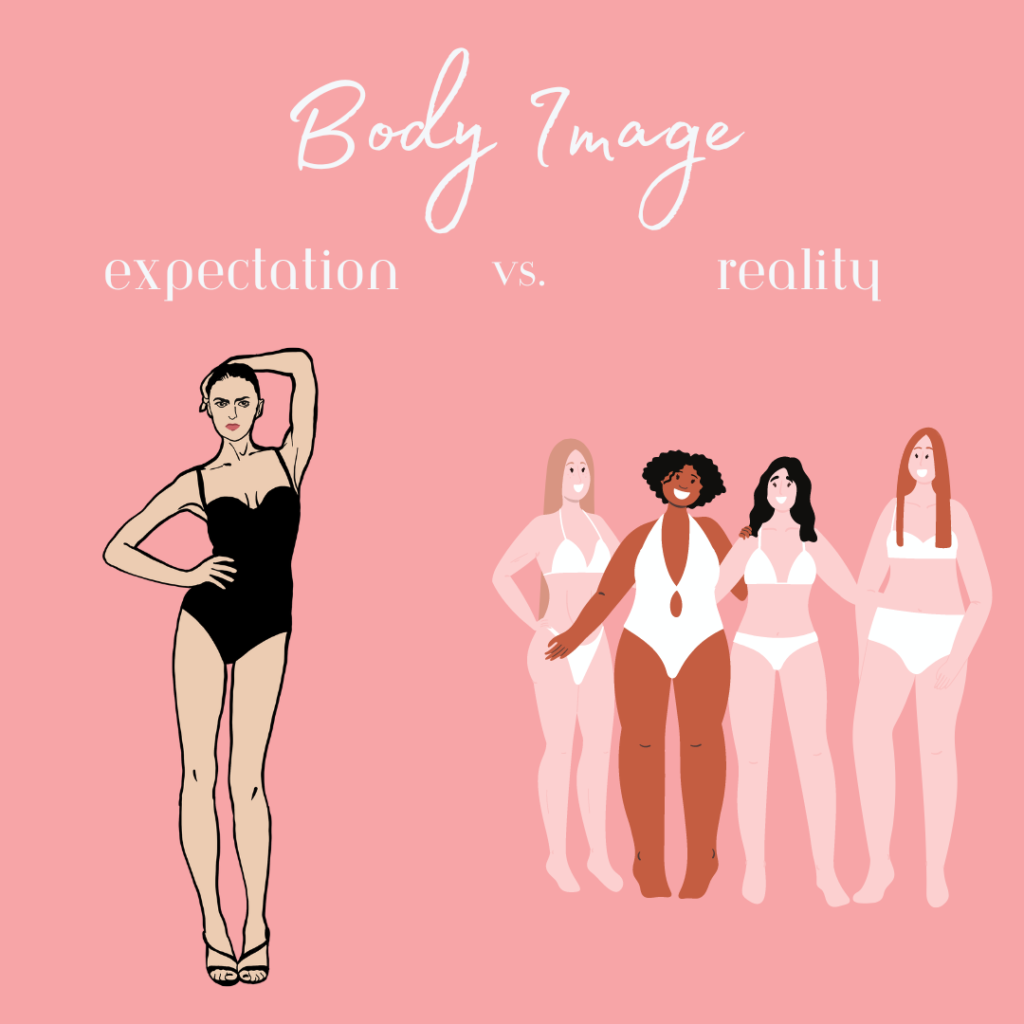
With 4.89 billion users worldwide, social media is extremely prevalent. The increasingly widespread use of social media use in our society has led to extensive research that has consistently proven the strong correlation with negative body image ideals.

Social media provides constant exposure to unrealistic beauty standards for users. This is particularly harmful for younger audiences, as they are more impressionable. For example, young girls using social media platforms such as Instagram or TikTok are more likely to see an increase in body dissatisfaction. These platforms often glorify and normalize negative behaviors, such as extreme dieting, excessive exercise, or eating less than is necessary.

Exposure to these detrimental behaviors can lead to a skewed image of one’s body, which can ultimately lead to decreased self-esteem and an increase in disordered eating behaviors. For instance, when people see videos or images on social media of influencers, celebrities, or even their friends, they will inherently compare themselves to their physical appearance. This is intensified when the individual posts something that promotes changing one’s body, such as “What I Eat In A Day” videos, workout videos, “before and after” images, or “try-on hauls” in which the poster is engaging in body checking.

Since these behaviors are so normalized in our society, people posting this content on social media may not realize the harm. However, we must educate ourselves about how engaging in these practices can be detrimental to our mental health, as well as the mental health of our friends, family, and people we may not know.

While social media is inundated with harmful messages, many users attempt to counteract this with positive content. For example, the body-positive movement on social media has gained popularity, with millions of users tagging #bopo, #bodypositive, and #bodypositivity. This movement has been proven to help people appreciate their bodies more, as it encourages people to focus on the positive aspects, rather than elements they are unhappy with. Research has shown that viewing body-positive content can improve body satisfaction and increase positive mood.

While many of the statistics surrounding body image and social media are negative, we must also recognize that platforms such as Instagram and TikTok can also create positive environments for those struggling with body image issues. It is important to be mindful of the creators that we follow, as they can inadvertently have a large impact on a person’s perception of their appearance.

Comparison is the thief of joy, so it is necessary to remember that everyone is unique. Also, thin ≠ healthy: we must not assume that the way a person looks has anything to do with their health. We are only given one body, we should appreciate it for all that it does for us, rather than what it looks like.

If you are struggling with your body image and are trying to find ways to improve, try the following:

  • Follow body-positive creators on social media (I have listed some below)
  • Practice positive affirmations (examples below)
  • Practice gratitude for your body (examples below)
  • Don’t ruminate on body changes: this is a natural part of the human experience!
  • Remember that beauty is in the eye of the beholder

Body-Positive Creators:

  • @brittanilancaster (TikTok)
  • @thekatrinanichole (TikTok)
  • @spencer.barbosa (TikTok)
  • @laura.iu (Instagram)
  • @grow.withmoll (Instagram)
  • @kale.themwith.kindness (Instagram)

Positive Affirmations

  • “I am worthy of love and respect, no matter what my body looks like.”
  • “I love and accept myself and my body unconditionally.”
  • “I am comfortable and confident in my skin.”
  • “My body is unique, and that is something to be celebrated.”
  • “I do not need to change my appearance to be beautiful.”

Gratitude for your Body

  • “I am grateful for the strength and health my body provides.”
  • “I appreciate that my body can breathe and move.”
  • “I am grateful that my body allows me to experience life fully.”
  • “I am thankful that I can participate in daily activities without a second thought”
  • “I am appreciative of my body’s healthy functioning which allows me to thrive”

Sources

  • Abdou, A. Follow These 8 Body Positivity TikTokers For An Instant Boost Of Self-Love. Gimme. https://gim.me/how-to/body-positivity-tiktokers-to-follow/.
  • Cohen R, Fardouly J, Newton-John T, et al. (2019) #BoPo on Instagram: An experimental investigation of the effects of viewing body positive content on young women’s mood and body image. New Media & Society 21: 1546–1564.
  • Cohen, R., Newton-John, T., & Slater, A. (2021). The case for body positivity on social media: Perspectives on current advances and future directions. Journal of Health Psychology, 26(13), 2365-2373.
  • “How Many People Use Social Media?” (2023). Oberlo. https://www.oberlo.com/statistics/how-many-people-use-social-media#:~:text=The%20latest%20figures%20show%20that,jump%20in%20just%20five%20years.
  • Jiotsa, B., Naccache, B., Duval, M., Rocher, B., & Grall-Bronnec, M. (2021). Social media use and body image disorders: Association between frequency of comparing one’s own physical appearance to that of people being followed on social media and body dissatisfaction and drive for thinness. International journal of environmental research and public health, 18(6), 2880.

Filed Under: Blog Tagged With: blog, body image, mental illness, social media

  • « Go to Previous Page
  • Go to page 1
  • Go to page 2
  • Go to page 3
  • Go to Next Page »

Footer

Contact NAMI Mercer

609-799-8994
home@namimercer.org

1235 Whitehorse-Mercerville Rd.
Bldg. C, Ste. 303
Hamilton, NJ 08619

NAMI Mercer is a qualified 501(c)3 organization.

In a Crisis?

Call 609.396.HELP (4357)
Capital Health Emergency
Mental Health Services
Available 24/7

For children (< age 21)
Call 877.652.7624
Perform Care Mobilization
and Stabilization Services
Available 24/7

Follow Us

  • Facebook
  • Instagram
  • LinkedIn
  • YouTube

Reports & Documents

Annual Report
Newsletters
Privacy Policy

Contact
Sitemap

Copyright© 2025·NAMI Mercer County· Website by Blue Kite Web Solutions LLC